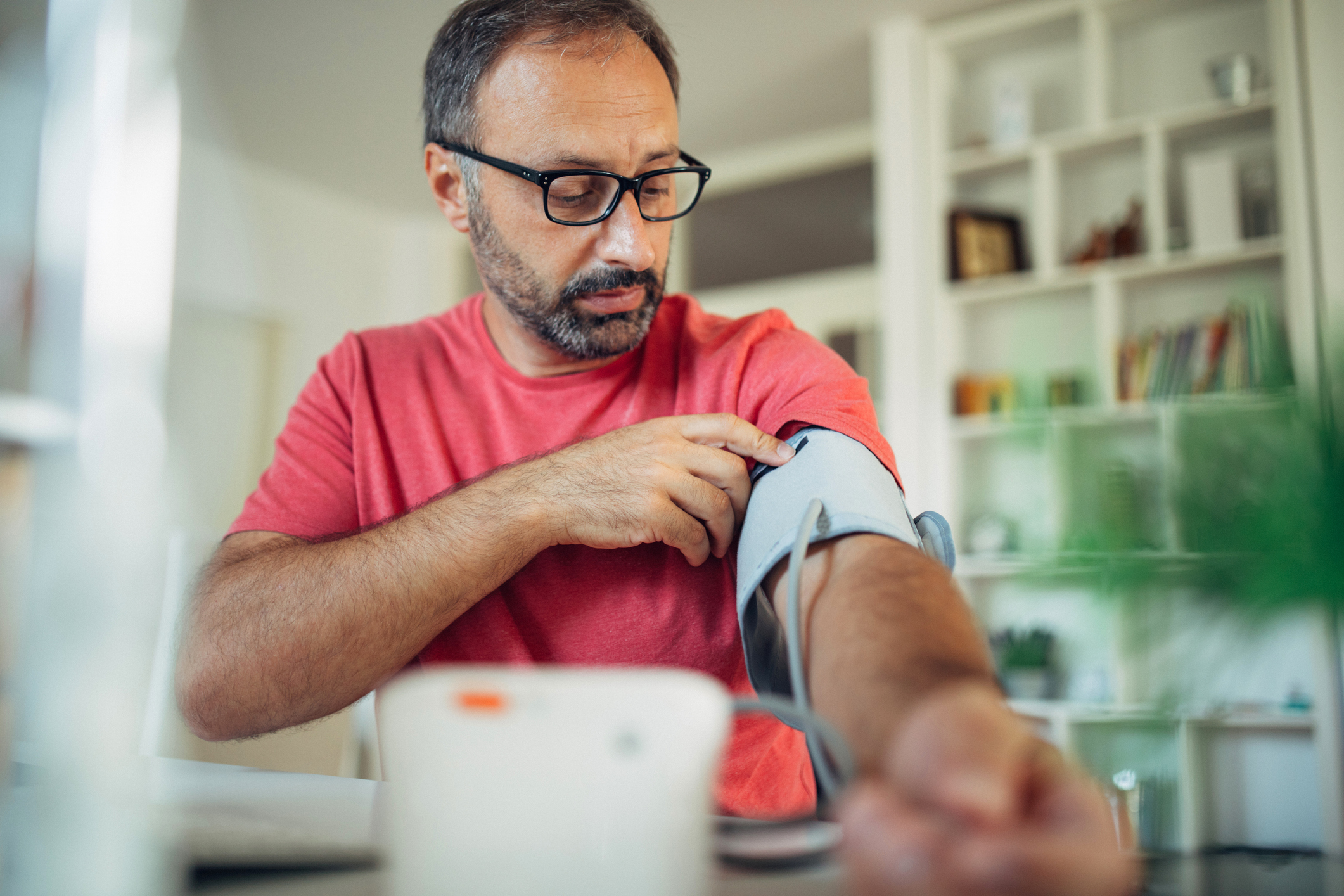
Around four million Australians have high blood pressure, a leading risk factor for heart disease. Most of these people – even those with very high levels – have no signs or symptoms.
High blood pressure (also called hypertension) is the largest risk factor for heart disease. If you have high blood pressure, it is likely to lead to serious health problems.
What is blood pressure?
As blood is pumped around your body, it exerts pressure on the walls of the arteries. The narrower the heart’s arteries are – and the more blood the heart pumps – the higher the blood pressure measurement will be.
Blood pressure is expressed as two numbers, for example 120 over 80 or 120/80. The top number represents the pressure when the heart beats (systolic pressure). The bottom number is the pressure when the heart is relaxed between beats (diastolic pressure).
Optimal blood pressure is 120/80. Anything between 120/80 and 139/89 is in the normal to high range. High blood pressure is classified as 140/90 or higher.
What causes high blood pressure?
The exact causes of high blood pressure are not clear. However, we know these factors significantly contribute:
- being overweight
- physical inactivity
- drinking more than two alcoholic drinks per day
- stress
- old age
- smoking
- high sodium diet
- family history of high blood pressure.
What’s the big deal?
Prolonged hypertension that is left untreated significantly raises your risk of some serious health problems. Elevated pressure over time can cause damage to various parts of your body including your:
- arteries—resulting in narrowed arteries or aneurysm
- heart—leading to coronary heart disease or heart failure
- kidneys—causing kidney failure or kidney scarring
- eyes—leading to damaged blood vessels, nerve damage, and impaired vision.
Untreated high blood pressure may also lead to sexual dysfunction and bone loss in older women.
What can be done about it?
High blood pressure can be prevented, or lowered simply by making some lifestyle changes.
An important part of managing your blood pressure is to have regular health checks. Because high blood pressure doesn’t have any symptoms, the only way to know if you have a problem is to have it checked by a doctor.
If you do have hypertension, your doctor may advise specific lifestyle changes, or prescribe medicine to control your blood pressure. However, it’s important to realise that medication doesn’t cure high blood pressure, nor is it a substitute for healthy living.
Keeping your blood pressure in a normal range is very important. You can significantly reduce your risk of high blood pressure, and the complications that can accompany it, by living a healthy lifestyle, eating a healthy diet and having regular health checks with your doctor.